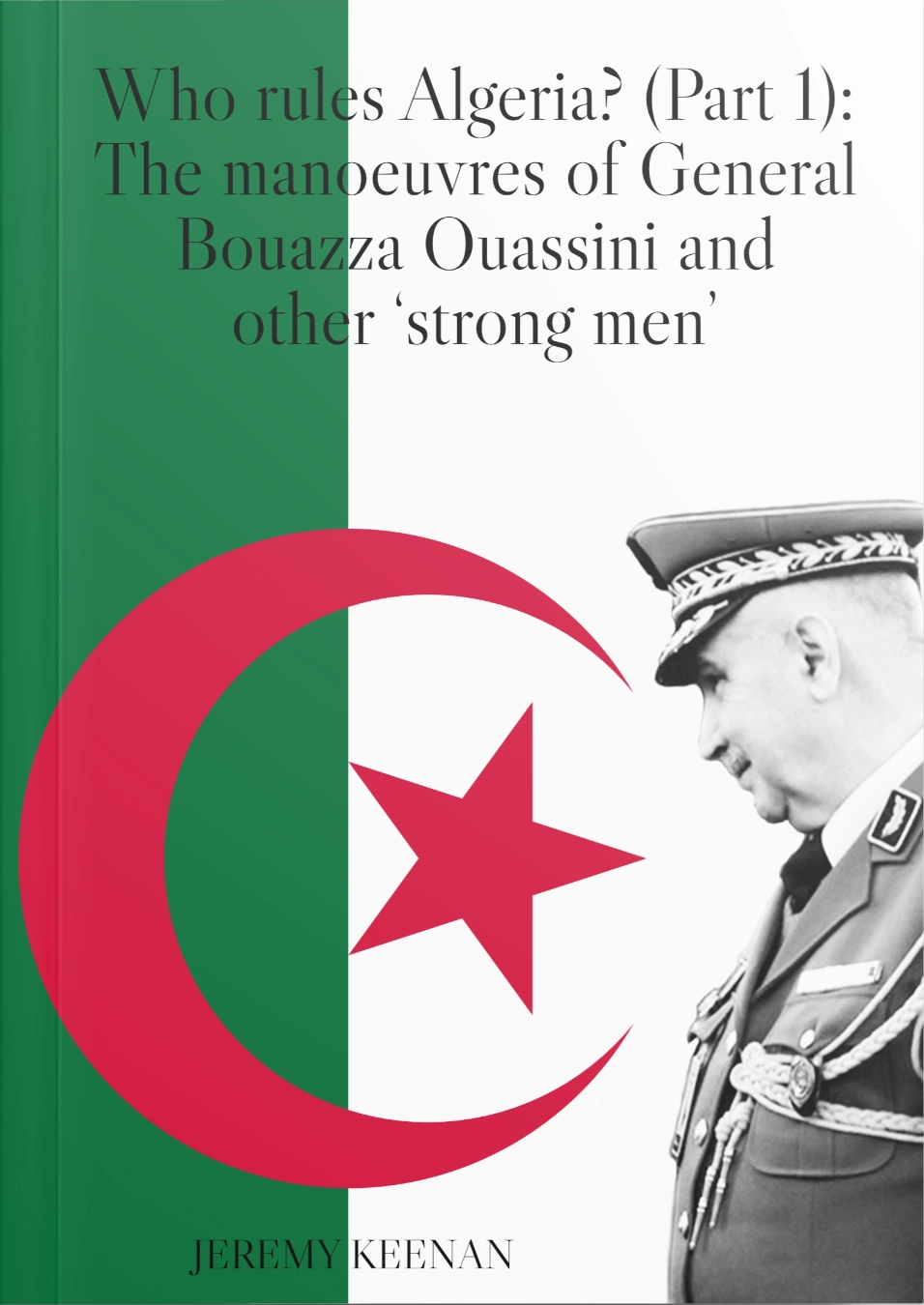
Who rules Algeria? (Part 1): The manoeuvres of General Bouazza Ouassini and other ‘strong men’
Read reportThis article is in two parts (I and II). The date on which each part was written and published is important, as they both focused on a major turning point in contemporary Algerian history, namely the presidential election of 12 December 2019 that brought President Abdelmadjid Tebboune into the presidency. The first article was written and published on 10 December, two days before the election. The second article was written shortly after the election and published on 20 April (2020), approximately four months after President Tebboune was ‘elected’ to the presidency. Part II explains and analyses the extraordinary happenings of that election and the equally strange events of its immediate aftermath.
Together, the two parts of the article give a detailed insight into how Algeria and its controlling regime of generals operates. It explains how ‘power’ is obtained, held and transmitted by a military regime which has retained power, for all but the first three years (1962-65), since independence from France in 1962, while turning the country during this century into a ‘mafia’ state.
Part I shows how the process of acquiring and transmitting power has been transformed during the course of this century, more or less since the end of the civil war or ‘Dirty War’, as it is known, of the 1990s. Up until the end of the first term of Abdelaziz Bouteflika’s presidency in 2004, a conclave of senior, very powerful generals decided on who they wanted to occupy the presidency. This ‘conclave’ system, described eloquently by Hugh Roberts and other scholars, became the accepted ‘theory’ of how Algeria was ruled. However, as this article explains, there was very little evidence of there being any such conclave in existence by the time Bouteflika had reached the end of his first term. That was largely because the generals who had comprised the conclave through and up to the end of the ‘Dirty War’ had either died, been side-lined or become incapacitated through old age. Although Bouteflika remained in the presidency until 2019, the article reveals how ‘power’ rather than being bestowed through a ‘conclave’, was increasingly ‘seized’ by ‘strong men’, invariably by scurrilous means, from within the ranks of the generals. The article tracks how this ‘strong man’ syndrome emerged from the ‘Dirty War of the 1990s to explain the enigmatic question of the last generation, namely: ‘Who Rules Algeria?’. Although Abdelaziz Bouteflika remained in the presidency for 20 years, until 2019, the real power was held first by General Mohamed ‘Toufik’ Mediène (the ‘God of Algeria’) until his demise after 2013 and then by General Ahmed Gaid Salah, the Army Chief of Staff, until his death on 23 December 2019, less than two weeks after the first Part of this article was written. At that point, Gaid Salah was on the verge of being challenged by a new ‘strong man’, General Bouazza Ouassini, who, having thought he had taken control of the 12 December presidential election, fell, as Part II reveals, as quickly as he had risen to power.