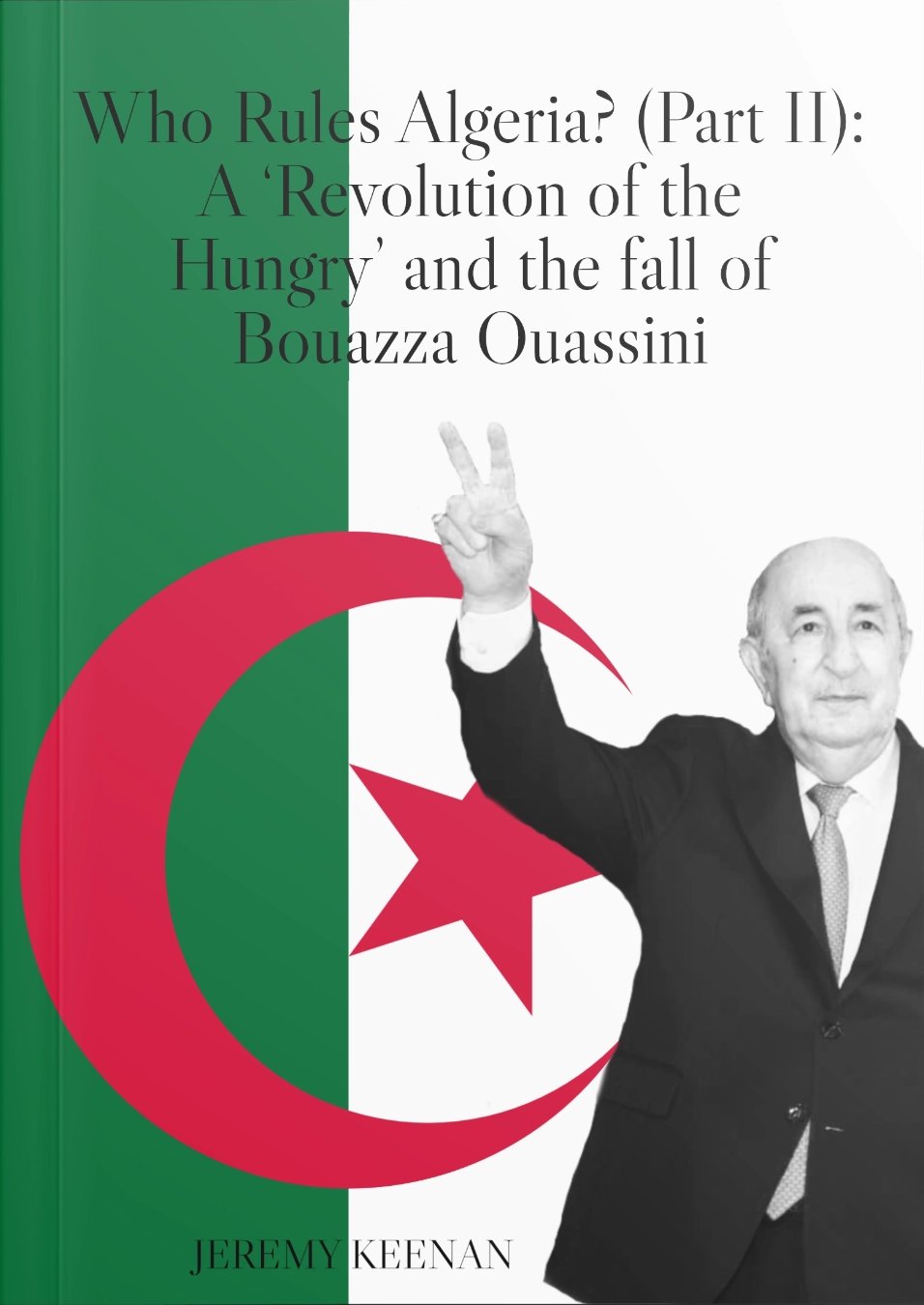
Who Rules Algeria? (Part II): A ‘Revolution of the Hungry’ and the fall of Bouazza Ouassini
Read reportPart II of this article explains the outcome of Algeria’s extraordinary presidential election held on 12 December 2019. It then examines the first four months of Abdelmadjid Tebboune’s presidency, which set the seal on the subsequent years of his enfeebled time in office.
The election was double rigged, as is normal with Algerian elections: firstly, to produce an acceptable participation rate and confer a veneer of legitimacy; secondly to affirm the candidate that the army command had pre-selected. The article explains how the regime came up with an official participations rate of 39.93% when the election was boycotted by almost all Algerians, with the real participation rate being about 8%. The article then explains how Azzedine Mihoubi, the supposedly hot favourite, received only 7.28% of the official votes while the outsider, Abdelmadjid Tebboune, took over 58% of the vote. The answer to this second question reveals the extraordinary circumstances of how the army chief of staff, General Gaid Salah, Algeria’s ‘strong man’ of the day and of the previous half dozen years, discovered, with perhaps only three hours to go until the polls closed, how he had been hoodwinked by General Bouazza Ouassini, who, as Part I explained, had been plotting to take over from Gaïd Salah as Algeria’s new ‘strong man’. Within days of Gaid Salah’s last-minute re-jigging of the election figures to have Abdelmadjid Tebboune replace Mihoubi as the winning candidate, Gaïd Salah was dead and Bouazza Ouassini behind bars, where he is still facing a very long prison sentence on multiple charges. Gaïd Salah’s death, and the unanswered question of whether he was murdered, along with the rise and fall of Bouazza Ouassini as Algeria’s aspirant ‘strong man’, marked a major shift in the ‘post-Bouteflika’ era power dynamics.
The final part of the article reveals how the mainstream media completely misjudged Tebboune, still regarded by most Algerians as the army’s puppet and a weak and ‘illegitimate’ president, in that neither he nor the regime as a whole had any intention other than to quash through brute repression the prevailing popular rebellion, or hirak as it was known, that saw millions of Algerians demonstrating against the regime on the streets every Friday, and for the new army chief, Saïd Chengriha, to reinstate the eradicateurs, such as DRS boss, Mohamed ‘Toufik’ Mediène, General ‘Hassan’ and other ‘war criminals’ of the 1990s.